Português
 Español
 English
Direct answer
Direct traffic is an ad leading straight to the sales page, no lead magnet or prior list. Visitor sees the ad, clicks, and buys in one session. It scales because it's simple to operate, without requiring email lists, automation, or complex funnels. But it has a ceiling because the more you spend on ads, the more expensive each click becomes, while your product price stays the same. Eventually, the cost to acquire each new customer becomes so high that your margin can't sustain it, and scaling stops making sense.
What is direct traffic and how does it differ from launch?
Direct traffic is continuous, no opening window or closure, no date urgency. Launch concentrates all sales in one or two weeks, with clear urgency and cart that closes. Direct traffic runs every day of the year, at the same pace, no end date.
The structure of direct traffic is simple: ad, sales page, checkout, customer. No email, no prior webinar, no warm-up class or lead magnet. Everything happens in one session. If the visitor clicks and doesn't buy that moment, they leave and don't come back via email. You lost that customer.
That's why direct traffic scales slowly. You don't accumulate leads, don't build progressive urgency. Each sale is individual, not in batches. But it's predictable and controllable. You learn fast how many clicks generate how many sales. Increase ad spend, sales increase proportionally, until acquisition cost becomes unsustainable. Launch is explosive, direct traffic is stable.
What offer works with direct traffic?
Four traits define if a product works with direct traffic: price, benefit clarity, existing demand, and low perceived risk. If any one is missing, direct traffic won't convert well.
Right price point. Direct traffic works best for products between five hundred and two thousand dollars. Below that, customers often impulse-buy even with doubt, and margin absorbs rejection. Above that, buyers want conversation, want to validate investment first. Products over two thousand dollars need consultative funnel, not direct traffic. The customer wants to talk to someone.
Obvious benefit in ten seconds. If you need five minutes of video to explain what the product does, direct traffic won't work. The sales page must be so clear that the visitor understands the value before scrolling. The faster someone sees the benefit, the faster they decide.
Audience that already knows the problem. If the visitor is still discovering they have a problem to solve, direct traffic is too expensive as an education tool. It works better when the audience already knows solutions exist and is comparing options. They already want the product, they just need to pick which one.
Low perceived risk. If the buyer fears losing money with the purchase, they want social proof, testimonials, or refund guarantee before paying. Direct traffic doesn't leave time to build that trust. If your product has high perceived risk, you need a longer funnel.
What needs to be ready in checkout for direct traffic?
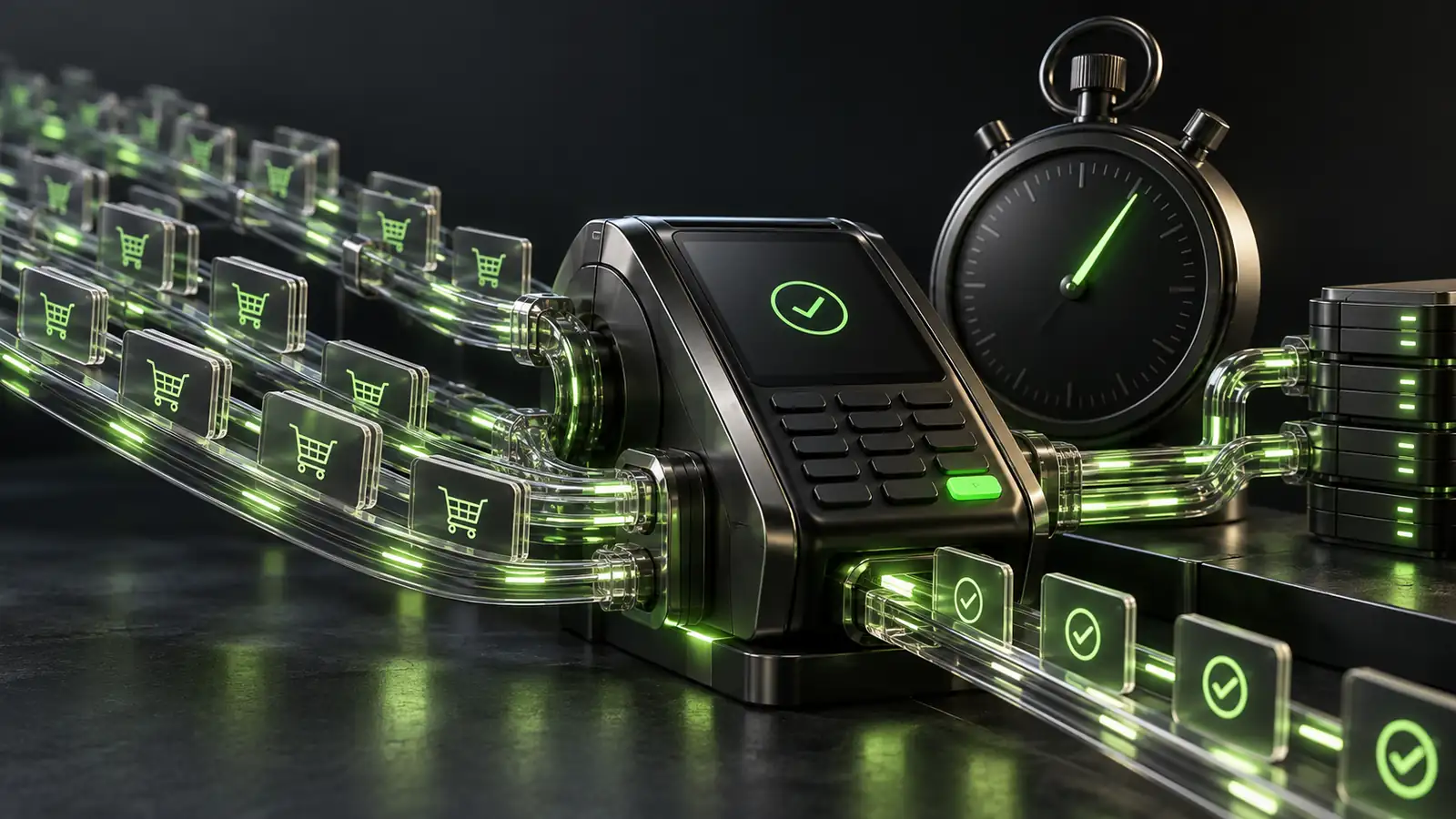
Checkout is half the sale in direct traffic. If it freezes, rejects many transactions, or asks too much information, you lose everything. Before scaling direct traffic, you need to validate your checkout with real volume.
Stable approval rate. Test checkout with different countries, credit cards from various banks, and payment methods. You want to know real approval rate in each country where you'll advertise. If many purchases reject in a specific country, the fault may be the bank, processor, or your checkout. Approve transactions consistently.
Users spend most of their time on other sites. This means that users prefer your site to work the same way as all the other sites they already know.
Quick confirmation. When customer clicks to pay, they want immediate feedback. If approval takes too long, the customer thinks it was rejected and clicks again. This duplicates the credit card charge, generates chargeback, and hurts your processor score. Confirmation should come in seconds, not minutes.
Clear post-sale page. Customer bought and wants to know what happens next. Show where to access the product, what the link is, what the password is, and how to contact support if they have questions. This step reduces chargebacks because the customer is certain they bought and could access it.
Automatic confirmation email, sent fast. First contact after purchase is critical. Email should confirm the purchase, reaffirm the value, show how to access, and prepare the customer for early questions. Without this, the customer stays uncertain, and you get chargebacks.
When does direct traffic stop scaling?
Direct traffic stops when the acquisition cost of a new customer exceeds what your margin can support. It's not mysterious, it's pure math. If your product costs one thousand dollars and your gross margin is seventy percent, you have seven hundred dollars to cover acquisition, salary, and operations. If the cost to acquire one customer rises to five hundred, you have two hundred left. You can breathe there, but growing becomes hard.
How to find your ceiling. Start with ten percent of what you imagine is max monthly ad spend. Run for a month, measure return on investment, and see if sales grow proportionally. If the return is good, increase spend by another ten percent. Keep raising until the return drops. That's your ceiling for now.
After hitting your ceiling, you have options: raise your product price, improve your margin elsewhere, add complementary offer, or switch to another sales model like launch, consultative funnel, or affiliates. Many people combine direct traffic with launch: keep offer open year-round for steady income, and do launches on strategic dates for spikes.
Does international direct traffic work differently?
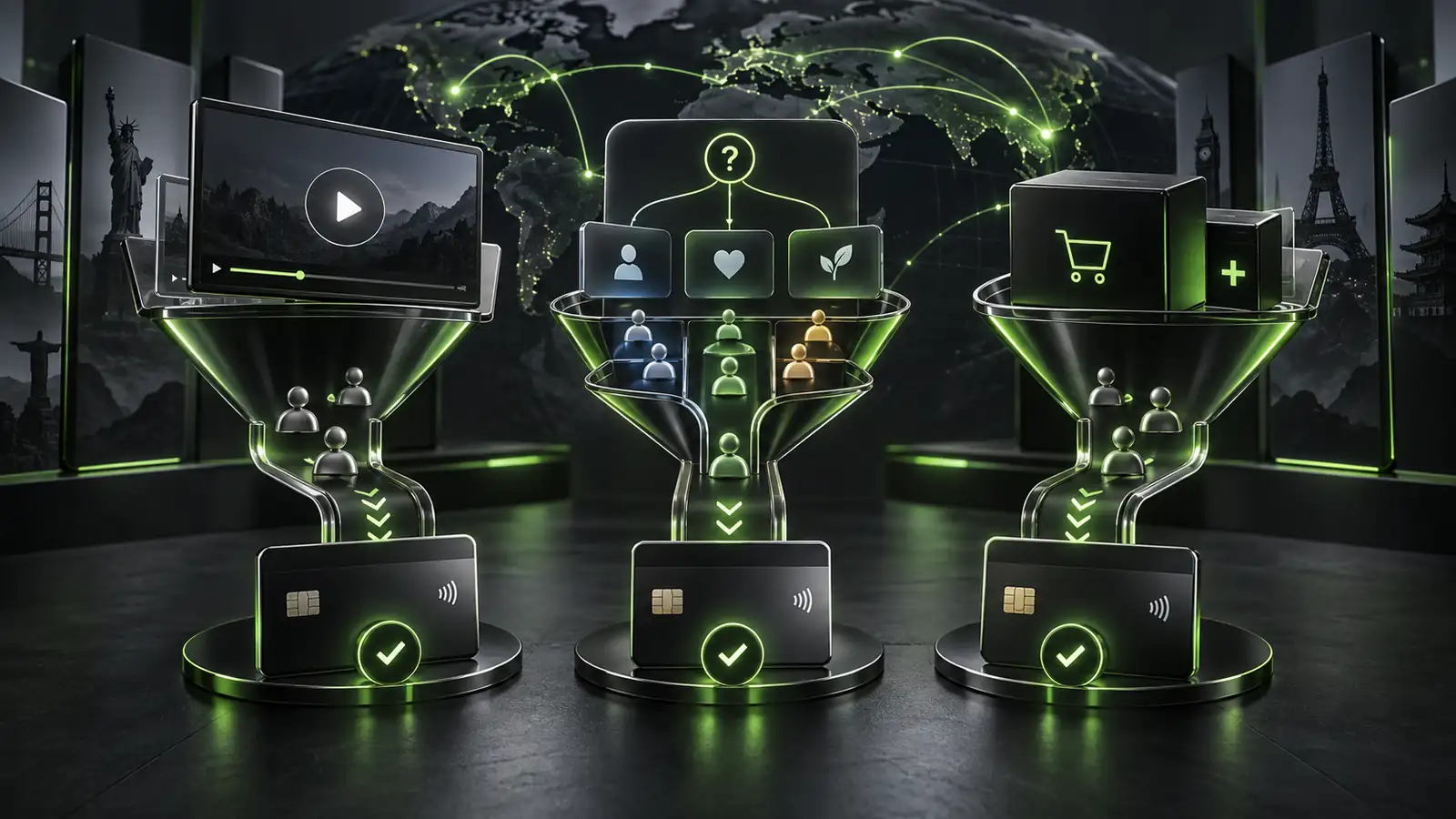
Principles are the same, but approval rate and ad cost change country to country. An ad in Brazil costs less than one in the United States. A purchase approved in Sao Paulo might be rejected in Mumbai for fraud risk reasons. A payment method that works well in Brazil might be rare in another country.
When scaling abroad, test market by market. Start with five percent of total direct traffic budget in a new country. Run for a week or two, validate approval, measure return on investment, and decide if you increase spend. Don't put everything at once into a new market. The risk is high and you can burn budget without learning anything.
To sell internationally with direct traffic, checkout must be prepared for each country. Local currency, local language on the page, preferred payment method for that market. If your checkout only takes credit card, you lose sales in Asia where digital wallet is preferred. If the page is only in English, you lose sales overseas. Learn specific steps in global checkout, complete setup.
Your margin is my opportunity.
Where Mundpay fits in direct traffic
Mundpay offers global checkout that works in 190 countries. When you scale direct traffic overseas, checkout needs to adapt to each country. It reads buyer IP, detects location, converts currency in real time, and offers the preferred payment method for that market, all automatic. You don't need to integrate ten different payment methods, the checkout picks the best for each visitor.
International direct traffic also means your payout needs to be fast. If you wait fifteen days to receive funds, it's hard to reinvest in ads. At Mundpay, payout is D+3. This lets you cycle capital fast and test more markets with the same budget. Learn more in best sales funnels for international selling.
In summary: What is direct traffic and why it scales
- Direct traffic is sales with no long funnel, ad straight to checkout.
- Works for products between 500 and 2,000 dollars with clear benefit and audience aware of the problem.
- Scales because it's simple, but has a ceiling: when customer cost exceeds margin, growth stops.
- Internationally, same principles apply, but checkout and approval vary by country.
Frequently asked questions
Is direct traffic the same as a sales page?
No, direct traffic is the acquisition model. Sales page is the format. You can have direct traffic leading to a long page, or direct traffic leading straight to checkout.
What's the difference between direct traffic and product launch?
Launch is concentrated in a short window with urgency. Direct traffic is continuous, no window, no cart closure. Direct traffic scales slowly. Launch is explosive but finite.
Can I scale direct traffic forever?
No. Every offer has a market ceiling. The more you spend on ads, the higher the cost per click. Eventually you reach a point where margin can't support more growth. When you get there, you change model or raise your price.
Does direct traffic work with expensive products?
It depends. Products over 5,000 dollars need consultative funnel, interview, or application. Direct traffic works well between 500 and 2,000 dollars.
How do I know my scaling ceiling?
Test with one tenth of what you imagine is the max. If returns worsen, you found a limit. If they hold, increase by one tenth more. Continue until returns drop.